
Mind to Mind
René Warcollier publishes La Telepathie, exploring how thoughts, emotions, and images might be transmitted mind-to-mind.
René Warcollier publishes La Telepathie, exploring how thoughts, emotions, and images might be transmitted mind-to-mind.

Upton Sinclair's book Mental Radio describes controlled experiments in image-based telepathy, energizing early parapsychology.
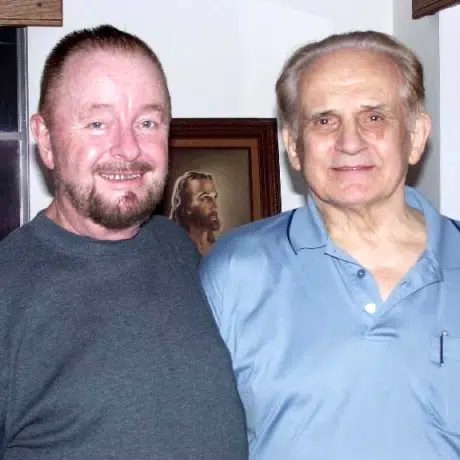
Ingo Swann begins psychokinesis experiments with Cleve Backster in New York, helping set the stage for later RV work.
Swann joins Gertrude Schmeidler’s lab work, taking part in PK and out-of-body experiments that deepen research interest in his abilities.
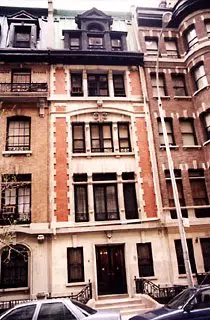
At the ASPR in New York, Swann describes distant weather in Tucson; the term “remote viewing” is adopted for this kind of experiment.
ASPR researchers run “beacon” trials, where a distant person at a site acts as a focus for Swann’s remote descriptions.
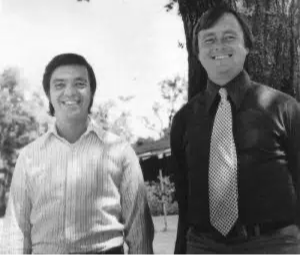
Cleve Backster shows Swann a letter from physicist Hal Puthoff at SRI, starting the dialogue that leads Swann to California.
At Stanford, Swann attempts to psychically perturb a quark-detector / magnetometer setup, producing anomalous data that attracts attention.
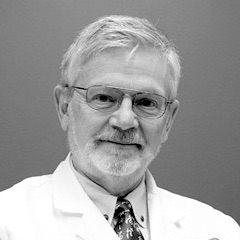
Puthoff shares the magnetometer findings with CIA scientist Kit Green, prompting growing intelligence-community interest in remote viewing.
CIA personnel visit SRI to test Swann under controlled conditions; Russell Targ is drawn into the work as a collaborator.
Laser physicist Russell Targ formally joins SRI’s remote viewing research, helping design and analyze experiments.
The CIA funds SRI with an exploratory contract to investigate remote viewing as a potential intelligence tool.
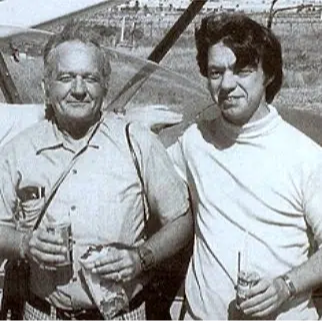
Pat Price and Ingo Swann describe NSA’s Sugar Grove facility in West Virginia, an early high-profile operational target.
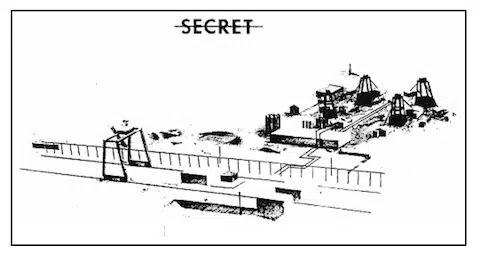
Pat Price remotely describes a sensitive installation near Semipalatinsk in the USSR, demonstrating perceived strategic value.
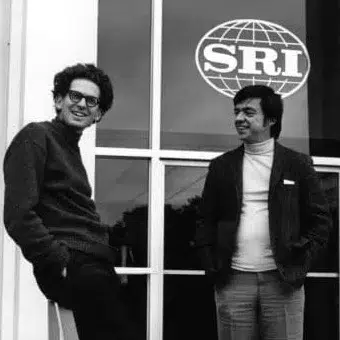
Targ and Puthoff publish a paper on remote viewing in the journal Nature, putting their data before the wider scientific community.
The Air Force Foreign Technology Division becomes SRI’s main sponsor for remote viewing work, guided by Dale Graff.
The CIA withdraws from the SRI program and ends its direct funding of remote viewing research.
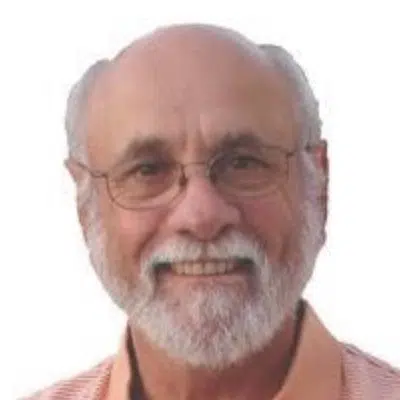
Physicist Edwin May enters the SRI program, later becoming a key scientific leader for remote viewing research.
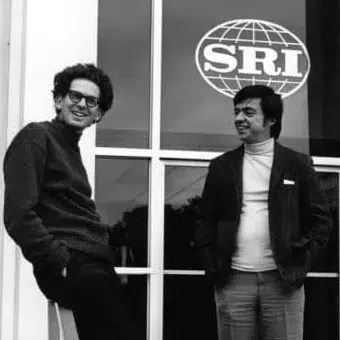
Puthoff and Targ publish a major article on remote viewing in Proceedings of the IEEE, further documenting their lab work.
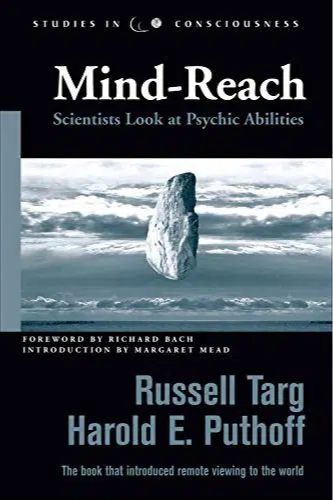
Targ and Puthoff release Mind Reach, a popular book that summarizes their SRI experiments for a general audience.
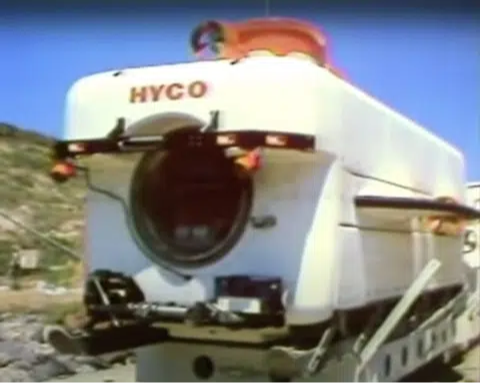
Mobius Group and SRI cooperate on Project Deepquest, a submarine-based remote viewing experiment led by Stephan Schwartz.
Skip Atwater establishes the U.S. Army’s GONDOLA WISH program to explore operational use of remote viewing.
Viewers like Mel Riley, Joe McMoneagle, and Ken Bell are chosen for the Army’s new GRILL FLAME remote viewing unit.
The Army renames the GONDOLA WISH project as GRILL FLAME as work continues at Ft. Meade.
The Army’s INSCOM command is tasked with developing a sustained parapsychology / remote viewing capability.
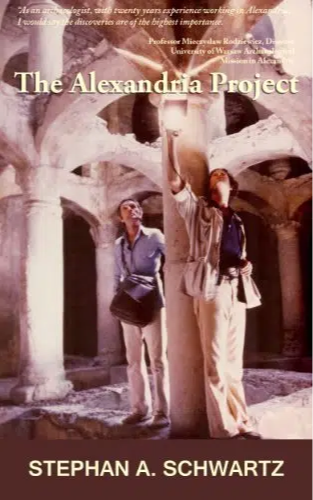
Stephan Schwartz leads the Alexandria Project in Egypt, using remote viewing to aid archaeological discovery.
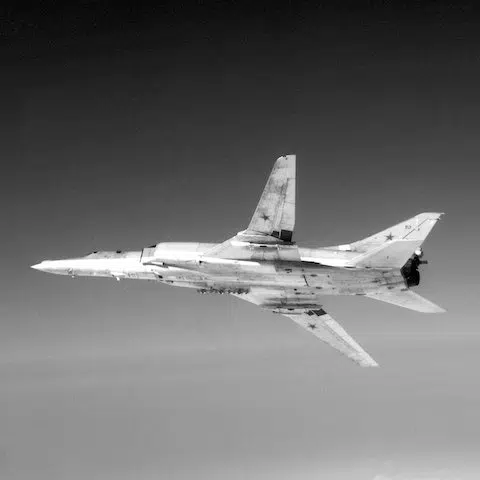
Remote viewers connected with Dale Graff and SRI help locate a crashed Soviet TU-22 reconnaissance aircraft.
The Ft. Meade unit performs its first fully operational intelligence-oriented remote viewing session.
After the Air Force cancels its RV program, Dale Graff moves to the Defense Intelligence Agency to oversee the effort.

Ingo Swann and Hal Puthoff formalize CRV, a structured, stage-based approach to remote viewing training.
Russell Targ leaves the SRI remote viewing program, moving on to other projects and writing.
Viewer Mel Riley departs the Army’s Ft. Meade unit after several years of operational work.
With Swann as trainer, Tom McNear and Rob Cowart begin the first formal CRV training program for the military.
The Army RV project is renamed CENTER LANE as it continues under evolving security designations.
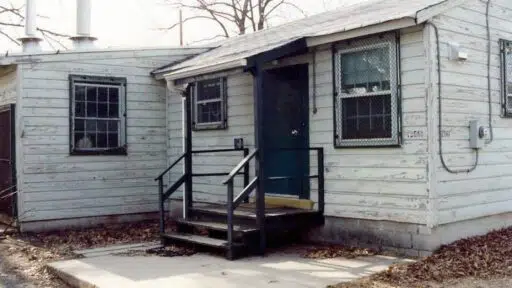
Charlene Cavanaugh becomes part of the Ft. Meade remote viewing team, adding to the roster of military viewers.
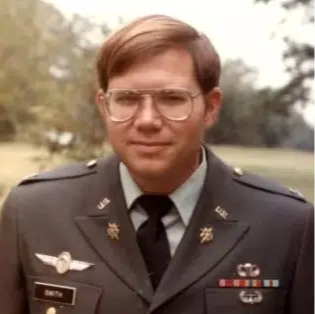
Paul H. Smith arrives at Ft. Meade, later becoming one of the best-known military CRV practitioners and authors.
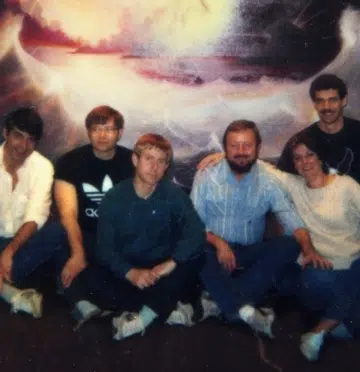
Bill Ray and others join the second CRV training group, with Ed Dames added at the last moment.
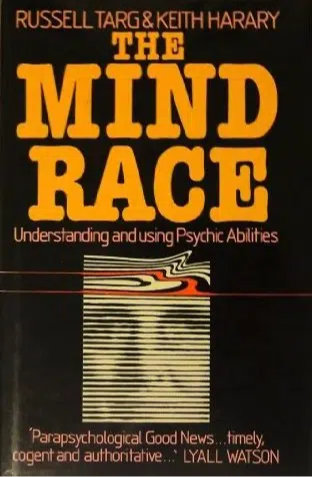
Targ and Keith Harary publish Mind Race, describing remote viewing experiments and applications to the public.
Lyn Buchanan becomes a member of the Ft. Meade team, later teaching CRV widely after the program ends.
Renowned viewer Joe McMoneagle leaves the Ft. Meade RV unit and eventually shares his experiences in books and lectures.
Puthoff leaves SRI to lead the Institute for Advanced Studies in Austin, but remains influential in the field.
Edwin May takes over leadership of the SRI remote viewing program, emphasizing rigorous statistics and protocol.
Stephan Schwartz directs the Caravel underwater archaeology project, again applying remote viewing to real-world discovery.
Mel Riley is reassigned to the Ft. Meade unit, bringing prior operational experience back into the team.
DIA fully takes charge of the operational program and renames it SUN STREAK, with Ed Dames joining the unit.
Another Schwartz-led underwater archaeology project, the Brig Leander, uses remote viewing as part of its toolkit.
F. Holmes “Skip” Atwater leaves the Ft. Meade unit, closing a foundational chapter in Army remote viewing.
David Morehouse joins the Ft. Meade RV unit, later becoming widely known through his writing and teaching.
Ed Dames departs the Ft. Meade program and later becomes a public figure teaching and discussing remote viewing.
Dale Graff becomes head of the Ft. Meade unit and renames the operational project STAR GATE.
Edwin May relocates the research effort from SRI to Science Applications International Corporation (SAIC).
Ingo Swann publishes a practical book on ESP and remote viewing, aimed at helping readers access their own abilities.
Joe McMoneagle’s book Mind Trek offers an insider’s account of remote viewing and his experiences in the program.
Program manager Dale Graff leaves the government remote viewing unit, later writing about psi and dreams.
Budget language transfers oversight of STAR GATE from DIA to the CIA as part of broader reorganization.
The American Institutes for Research issues a controversial review that downplays remote viewing’s intelligence value.
The CIA terminates the STAR GATE program and reassigns remaining personnel, ending the official U.S. RV effort.
A UK TV special, The Real X-Files: America’s Psychic Spies, brings the existence of the RV program to public attention.
Ted Koppel’s Nightline runs a segment on government remote viewing, interviewing former officials and viewers.
Remote viewing becomes a frequent topic on Art Bell’s late-night show and other media, spreading RV to a mass audience.
David Morehouse’s book Psychic Warrior provides a dramatic narrative of his time in the Ft. Meade unit.
Jim Schnabel’s book Remote Viewers offers an investigative history of America’s psychic spy program.
Dale Graff publishes a book on remote viewing, ESP, precognitive dreams, and synchronicity, blending science and personal story.
Lyn Buchanan’s company P>S>I hosts the first dedicated CRV conference, with Russell Targ and John Alexander among the speakers.
The International Remote Viewing Association (IRVA) is created to support research, education, and ethical practice in remote viewing.
.
Russell Targ, veteran SRI researcher, serves as the first president of the newly formed International Remote Viewing Association (IRVA)
IRVA sponsors a remote viewing conference in Mesquite, Nevada, featuring Charles Tart, Jessica Utts, Larry Dossey, Marcello Truzzi, and others.
Former Ft. Meade unit commander F. Holmes “Skip” Atwater publishes his book about guidance, intuition, and his life’s inner experiences.
The first IRVA-sponsored remote viewing conference takes place in Las Vegas, with Edgar Mitchell, Dean Radin, and Jeffrey Mishlove as featured speakers.
Former Army RV unit founder F. Holmes “Skip” Atwater is elected president of IRVA, bringing his operational background into civilian leadership.
Austin, Texas hosts the IRVA conference celebrating 30 years of remote viewing, featuring Ingo Swann, Hal Puthoff, Dale Graff, and Cleve Backster.
Lyn Buchanan’s book The Seventh Sense shares his experience as a U.S. military remote viewer and outlines CRV concepts for the public.
IRVA co-sponsors a remote viewing conference with the A.R.E. in Virginia Beach, featuring Charles Cayce, James Spottiswoode, Hal Puthoff, and Dale Graff.
Researcher and author Stephan A. Schwartz becomes IRVA president, emphasizing scientific approaches and applied projects.
IRVA meets in Las Vegas, with Ingo Swann and psychologist Daryl Bem among the highlighted presenters.
Paul H. Smith’s book Reading the Enemy’s Mind offers a detailed history of the U.S. Star Gate program from an insider’s perspective.
Former Army CRV instructor Paul H. Smith becomes IRVA president, continuing the association’s emphasis on education and standards.
Las Vegas again hosts the IRVA conference, with Ingo Swann, William Tiller, and Dean Radin presenting on consciousness and psi.
IRVA’s Las Vegas meeting features Jacques Vallée, Jessica Utts, and clairvoyant George McMullen among its main speakers.
Another IRVA conference in Las Vegas, with presentations by Roger Nelson, John Alexander, Skip Atwater, and Dale Graff.
John P. Stahler assumes the presidency of IRVA, guiding the organization into a new decade.
Former viewer Ed Dames publishes Tell Me What You See, describing his remote viewing cases and experiences as a psychic spy.
IRVA meets in Las Vegas with speakers Jim Channon, perceptual scientist Donald Hoffman, and researcher Brenda Dunne.
Russell Targ releases Limitless Mind, blending remote viewing research with a broader exploration of consciousness and spiritual transformation.
IRVA’s Las Vegas conference features philosopher Stephen E. Braude as keynote, focusing on evidential psi and survival questions.
The René Warcollier Prize is first awarded to Lance Beem and co-investigators Debra Katz, Melvin Morse, and John Peter Thompson for remote viewing research.
IRVA returns to Las Vegas, with Kit Green as keynote and presentations by Jim Channon and Tom McNear.
The prize recognizes the study “Remote Searching: An Evaluation of Dowsing and Intuition,” led by Robert Price and colleagues.
Psychic detective and remote viewer Pam Coronado becomes IRVA president, supporting education and outreach.
In Las Vegas, IRVA’s conference features Eben Alexander as keynote, plus talks by Nancy Du Tertre, John G. Kruth, and John Kortum.
Former military remote viewing trainer Glenn B. Wheaton assumes the presidency of IRVA.
IRVA meets in New Orleans with Hal Puthoff as keynote, plus talks by Dale Graff, Noreen Renier, and physicist Daniel Sheehan.
The award honors research on how image background conditions influence target recognition in remote viewing sessions.
Paul H. Smith is elected IRVA president for a second term, helping guide continued conferences and programs.
New Orleans hosts IRVA’s conference with Marilyn Schlitz as keynote, and presentations by David Barnes, Gary Arnold, and Nancy Smith.
John Cook becomes IRVA president, continuing the association’s work in education and community building.
The conference features talks by Gail Husick, Debra Katz, Elly Molina, Jon Noble, and others on expanding remote viewing practice.
The prize goes to a proof-of-principle study on associative remote viewing, exploring timing and judging protocols.
IRVA and the SSE co-host a conference featuring Stanley Krippner, Pam Coronado, John Cook, Gail Husick, Maximilian Müller, and Dale Graff.
Jennifer Lyke’s research examines how experience, confidence, and personality traits relate to target description accuracy in experienced remote viewers.
Speakers include Lyn Buchanan, Hal Puthoff, Stephan Schwartz, Paul H. Smith, Angela Thompson Smith, and Nick Cook, reflecting both history and new directions.
IRVA meets in Rhinebeck, New York, with presentations by Patty Gallagher, Lori Lambert Williams, Nancy McLaughlin-Walter, and others.
The award goes to research on associative remote viewing and time-delay factors for horse-race predictions, led by Tom Atwater and Teresa Fendley.
Researcher and author Debra Lynne Katz becomes IRVA president, emphasizing research, training, and the growth of remote viewing communities worldwide.

Get started today before this once in a lifetime opportunity expires.